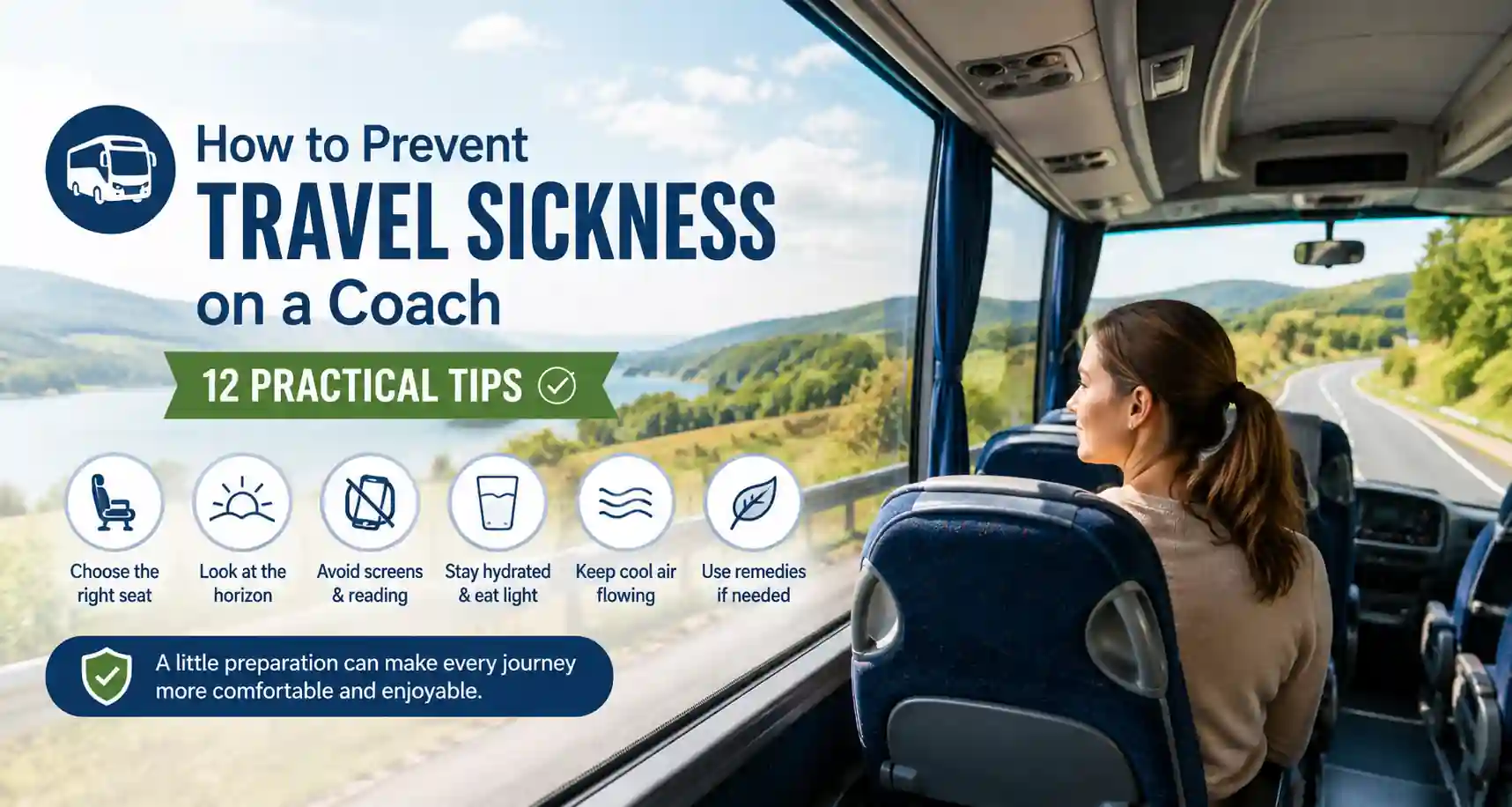
How to Prevent Travel Sickness on a Coach: 12 Practical Tips
A group journey should begin with excitement, not with someone feeling pale, dizzy or worried that they may be sick before the coach has even reached the motorway.
Travel sickness can affect adults and children on short day trips, airport transfers and longer coach journeys. It can be particularly uncomfortable on winding roads, during stop-start traffic or when a passenger spends too long looking at a phone or book.
Fortunately, a little preparation can make the journey much more comfortable. This guide explains how to prevent travel sickness on a coach or minibus, where to sit, what to eat and what to do when symptoms begin.
Quick answer: Sit towards the front of the vehicle with a clear view of the road, look at the horizon, avoid reading and screens, keep cool air flowing, eat a light meal before travelling and speak to a pharmacist in advance if you regularly need a travel sickness remedy.
Why Does Travel Sickness Happen?
Travel sickness, also known as motion sickness, happens when the brain receives information that does not appear to match.
Your inner ear senses that the vehicle is moving, turning or travelling over uneven roads. However, if your eyes are focused on a stationary phone, tablet or book, they may suggest that your body is sitting still. This conflict can cause nausea, dizziness, sweating, headache, pale skin and vomiting.
Some passengers are more sensitive than others. A person who regularly travels without difficulty may still feel unwell when tired, anxious, overheated or travelling along an unusually winding route.
1. Choose a Seat Towards the Front
The best seat on a coach for travel sickness is normally within the front section, where the passenger can see the road ahead and anticipate corners, braking and changes in direction.
The rear of a coach can feel more lively over bumps and around bends. It may therefore be less comfortable for someone who already knows they are vulnerable to motion sickness.
On a minibus, choose a forward-facing seat with a good external view. Avoid sitting backwards or in a position where luggage, curtains or another seat completely blocks the view.
Seat layouts differ between vehicles, so tell the transport company about a travel-sick passenger when making the booking rather than waiting until everyone boards.
2. Look Ahead at the Road or Horizon
Looking outside helps the eyes recognise the same movement that the inner ear is detecting.
Focus on the road ahead, a distant point or the horizon. Avoid staring at nearby trees, road barriers or vehicles passing quickly beside the window, as these may make the movement feel more intense.
Passengers sitting on the window side can use the view, while someone in an aisle seat may be able to look through the front windscreen from the front section of the vehicle.
3. Put Away Phones, Tablets and Books
Reading messages, watching videos or concentrating on a book is one of the most common triggers for travel sickness on a coach.
The passenger’s eyes remain fixed on a nearby object while the body feels the vehicle moving. Even someone who feels fine at the beginning of the journey may become nauseous after twenty or thirty minutes of scrolling.
Choose entertainment that does not require looking down. Music, podcasts, audiobooks and conversation are generally better options for passengers prone to motion sickness.
4. Eat a Light Meal Before Travelling
Travelling with either an empty stomach or an overly full one can feel uncomfortable. Before departure, choose a light, familiar meal that is easy to digest.
Suitable options may include toast, crackers, bananas, plain sandwiches or another simple food the passenger normally tolerates well.
Avoid heavy, greasy or spicy meals shortly before the journey. Alcohol may also increase dizziness and nausea, so it is better avoided before and during travel.
5. Drink Water in Small Amounts
Bring water and take small, regular sips rather than drinking a large amount at once.
Fizzy drinks, very sweet beverages and excessive caffeine may make some passengers feel worse. Water is usually the simplest option for maintaining hydration during a long coach or minibus journey.
Group organisers should confirm whether drinks are permitted and remind passengers to use bottles with secure lids.
6. Keep Cool Air Flowing
Feeling hot or stuffy can make nausea more difficult to manage. Where the vehicle has adjustable air vents, direct gentle, cool airflow towards the passenger’s face.
Removing a heavy coat and wearing comfortable layers can also help. It is easier to add or remove a layer than to remain trapped in clothing that feels too warm once the journey begins.
Do not open windows or adjust vehicle systems without checking with the driver. The available ventilation arrangements will depend on the minibus or coach being used.
7. Rest Your Head and Reduce Movement
Keep the head supported against the seat or a travel pillow. Repeatedly turning around, leaning into the aisle or moving between seats may make symptoms worse.
Closing the eyes can also help because it removes the visual conflict between a stationary object and the movement detected by the inner ear.
Some passengers find that sleeping for part of a longer journey is the most comfortable option. A small neck pillow and comfortable clothing can make resting easier.
8. Use Slow, Controlled Breathing
Travel sickness can become more distressing when a passenger begins worrying about being ill in front of other people.
Slow breathing may help the person remain calmer. Breathe gently through the nose and slowly out through the mouth while keeping the head still and supported.
Group leaders should respond discreetly and calmly. Drawing everyone’s attention to the passenger can increase embarrassment and anxiety.
9. Plan Sensible Comfort Stops
For a long journey, suitable breaks can give passengers an opportunity to step outside, breathe fresh air, drink water and walk briefly.
The frequency and location of stops will depend on the route, journey time, vehicle, driver requirements and safe stopping facilities. These should be discussed when organising the itinerary.
Avoid adding unplanned stops unless someone genuinely needs assistance. The driver must always use an appropriate and lawful stopping location.
10. Speak to a Pharmacist Before the Journey
Pharmacies offer different travel sickness remedies, including tablets and other products. Some must be used before the journey begins, and some can cause drowsiness or other side effects.
Ask a pharmacist which option may be appropriate, particularly for:
Children
Pregnant passengers
People taking other medicines
Passengers with an existing health condition
Anyone who may need to drive later
Always follow the product leaflet and professional advice. Do not share medicines between passengers or assume that a product suitable for one person is suitable for another.
Further general guidance is available from the NHS motion sickness information page.
11. Prepare a Small Travel Comfort Kit
A prepared group organiser can deal with early symptoms before they become disruptive.
A simple travel kit may include:
Bottled water
Plain crackers or another light snack
Tissues and wet wipes
Disposable sickness bags
A spare top for a child
Hand sanitiser
A small towel
Any passenger’s own approved travel sickness remedy
Keep these items in an accessible bag rather than placing them deep inside the luggage compartment.
12. Tell the Driver or Organiser Early
Do not wait until symptoms become severe. If a passenger begins to feel warm, dizzy, pale or nauseous, they should tell the organiser or driver as soon as possible.
It may be possible to improve airflow, help the passenger settle into a more suitable available seat or use the next planned safe stopping point.
The driver must remain focused on the road, so one responsible group member should assist the unwell passenger where possible.
What Should You Do If Travel Sickness Has Already Started?
Put away any screen or book immediately. Look forward at a distant point or close the eyes, support the head and take slow breaths.
Use cool airflow where available, loosen unnecessary heavy clothing and take small sips of water. If a safe and planned stop is approaching, stepping outside and walking gently may help the passenger recover.
Motion sickness usually improves when the movement stops. If symptoms are severe, unusual or continue after the journey, seek appropriate medical advice rather than assuming travel is the only cause.
Helping Children with Travel Sickness
Children may not recognise the early signs of motion sickness. They may become unusually quiet, pale, sleepy or irritable before saying they feel ill.
Place a child who is prone to sickness in a suitable forward-facing seat where they can see outside, subject to all legal and safety requirements. Avoid giving them a tablet or phone to watch for the whole journey.
Music, conversation, singing and simple games that involve looking outside can provide distraction without forcing the child to focus on a nearby object.
Parents or guardians should bring approved remedies themselves and check suitability with a pharmacist before the day of travel.
Advice for School and Group Trip Organisers
Ask privately before departure whether any passenger regularly experiences travel sickness. This allows seating and preparation to be handled without embarrassing anyone.
For a school, club or organised group journey:
Record relevant passenger information in advance
Keep comfort supplies accessible
Seat vulnerable passengers appropriately where possible
Avoid screen-based entertainment for affected passengers
Build realistic stops into longer itineraries
Provide the transport operator with the complete route
Assign an adult to assist if a child feels unwell
No transport company can guarantee that a passenger will not experience motion sickness, but sensible planning can reduce common triggers and make symptoms easier to manage.
Is Travel Sickness Worse on a Coach Than in a Car?
Not necessarily. Comfort depends on the passenger, route, driving conditions, visibility, temperature and where the person sits.
A coach may feel different because passengers sit higher from the road, while the rear section can experience more noticeable movement. However, a comfortable vehicle, professional driving and a clear forward view may make a coach journey easier for some passengers than travelling in several smaller cars.
Frequently Asked Questions
Where is the best place to sit on a coach for travel sickness?
Sit towards the front of the coach where you have a clear view of the road ahead. Avoid the rear section if possible, as movement can feel more noticeable there. Exact seating depends on the vehicle layout and availability.
Does sitting by a window help with motion sickness?
It can help when the window provides a clear view of the horizon or distant scenery. Avoid focusing on nearby objects passing quickly beside the vehicle.
Should you eat before a coach journey?
A light meal is generally better than travelling with an empty stomach or eating a heavy, greasy meal. Choose familiar, simple food and avoid alcohol before travelling.
Do travel sickness tablets work on coach journeys?
Pharmacies offer remedies that may help, but suitability and timing vary. Speak to a pharmacist before travelling and follow the product instructions, especially when the remedy is for a child or someone taking other medicines.
Can using a phone cause travel sickness?
Looking down at a phone can trigger or worsen symptoms because the eyes focus on a stationary screen while the inner ear detects movement. Listening to audio without watching the screen is often more comfortable.
Can a minibus passenger experience travel sickness?
Yes. Motion sickness can happen in cars, minibuses, coaches, trains, boats and planes. The same basic advice applies: look ahead, avoid screens, stay cool and choose a suitable forward-facing seat.
Should the coach stop when someone feels sick?
The driver can only stop where it is safe and lawful. Tell the organiser or driver early so the situation can be considered alongside the route and the next suitable stopping place.
Arrange a Comfortable Group Journey with All-Ways Travel
Understanding how to prevent travel sickness on a coach can help families, schools, businesses, clubs and private groups prepare for a more comfortable journey.
All-Ways Travel provides private minibus and coach hire with professional drivers for journeys across the UK. Smaller groups can travel together by minibus, while coaches are available for larger parties, school trips, tours and longer group journeys.
When requesting a quotation, mention passenger numbers, luggage, collection points, destination, planned stops and any relevant comfort requirements. This helps the team recommend an appropriate vehicle and realistic itinerary.
Explore All-Ways Travel minibus and coach hire services, view the available fleet or request a private group travel quotation.