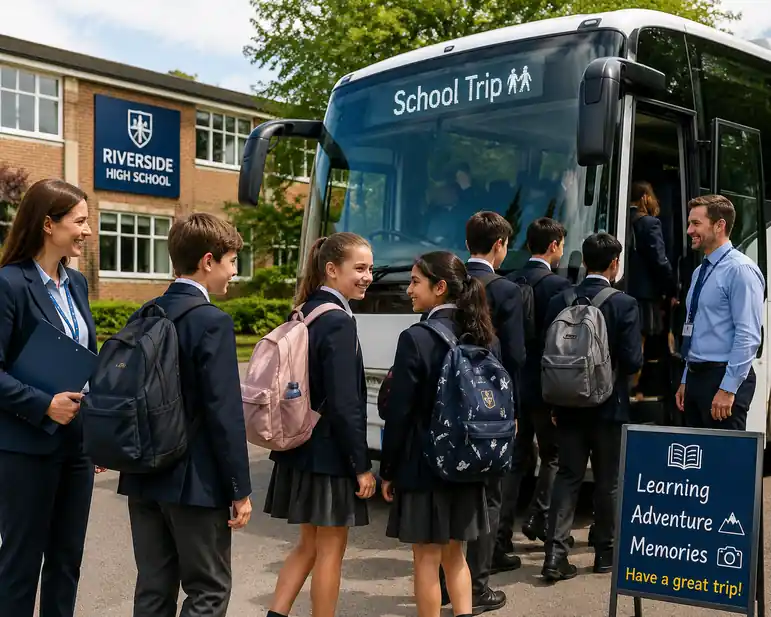
School Trip Planning Guide UK: Transport, Safety and Organisation Tips
Planning a school trip involves much more than choosing a destination and arranging a date. A successful educational visit requires careful organisation, clear communication and attention to safety at every stage. For teachers and school organisers, effective school trip planning in the UK means creating an experience that is enjoyable for students while also meeting important responsibilities around supervision, travel and risk management.
From museum visits and historical locations to outdoor learning experiences and activity centres, school trips UK provide valuable opportunities for students to learn outside the classroom. However, the success of any trip depends on how well the details are planned before the day arrives.
This guide explains the key steps involved in planning a school trip, including choosing the right destination, preparing safety measures, creating a travel checklist and organising suitable transport for students and staff.
Why Are School Trips Important for Students?
Educational trips allow students to experience practical learning beyond the traditional classroom environment. They can help improve confidence, encourage teamwork and make lessons more memorable through real-world experiences.
A well-planned trip can support different areas of learning, including:
History and cultural education
Science and environmental learning
Outdoor skills and teamwork
Personal development
Social interaction
Whether visiting a museum, heritage site, nature centre or activity location, educational trips UK schools organise can help students connect classroom knowledge with practical experiences.
How to Start Planning a School Trip in the UK
The earlier a school begins planning, the easier it becomes to manage the different elements involved. A structured approach helps teachers avoid last-minute problems and ensures students have a safe and enjoyable experience.
Define the Purpose of the Trip
The first step is deciding what the trip should achieve. The purpose will influence the destination, activities and preparation required.
For example, a school may organise a trip to:
Support a curriculum topic
Develop practical skills
Encourage teamwork
Provide cultural experiences
Having a clear objective makes it easier to select a destination that provides genuine educational value.
Choose the Right Destination
The chosen location should match the age group, learning goals and interests of students. Schools should consider travel distance, facilities, accessibility and whether the venue can accommodate the size of the group.
Popular school trip destinations include:
Museums and galleries
Historical landmarks
Science centres
Outdoor education centres
Theme parks with educational programmes
Create a Realistic Timeline
A good timeline should include enough time for approvals, communication with parents, transport arrangements and final preparations.
Many schools begin planning several months in advance, especially for larger groups or popular destinations.
School Trip Safety Checklist
Safety is one of the most important parts of any school outing. Schools should consider possible risks and make appropriate arrangements before students leave the premises.
The UK government provides guidance on health and safety on educational visits , including the importance of suitable planning and risk assessments for educational trips.
Complete Risk Assessments
A risk assessment helps schools identify potential problems and decide how they will be managed.
Consider:
Travel arrangements
Destination risks
Student supervision
Emergency procedures
Accessibility requirements
Trips involving unusual activities, longer distances or specific environments may require additional planning.
Plan Student Supervision
Supervision arrangements should be considered carefully before departure. Schools should ensure there are enough responsible adults available based on student numbers, ages and the activities planned.
Clear roles for teachers, assistants and volunteers help everyone understand their responsibilities during the trip.
Prepare Emergency Information
Teachers should have access to important information, including:
Emergency contact details
Medical information
Student lists
Parent communication details
Creating a School Travel Checklist
A detailed school travel checklist helps organisers keep track of important tasks before departure.
A useful checklist may include:
Destination confirmed
Student numbers finalised
Parent permissions completed
Staff responsibilities assigned
Transport arrangements confirmed
Emergency details prepared
Students briefed about expectations
Having everything organised before the journey reduces stress and allows teachers to focus on supporting students.
Choosing Transport for School Trips
Transport is a major part of school trip planning in the UK because students need a safe and organised way to travel between locations.
The right transport option depends on:
Number of students and staff
Distance of the journey
Luggage or equipment requirements
Accessibility needs
Travel schedule
Minibus or Coach Travel?
Smaller groups may find a minibus suitable, while larger school groups often require a coach to accommodate more passengers comfortably.
Organised school coach travel can simplify the journey because students and staff travel together rather than managing multiple vehicles or separate arrival times.
When arranging transport, schools should confirm:
Collection and drop-off points
Departure and return times
Passenger numbers
Vehicle suitability
A reliable travel plan can make the entire school outing easier to manage.
Making School Coach Travel More Organised
A smooth journey begins with good preparation. Schools should share clear travel instructions with students before departure.
Simple reminders can include:
Arriving on time for departure
Following teacher instructions
Keeping personal belongings organised
Respecting other passengers
All-Ways Travel supports group travel requirements across the UK, helping schools and organisations arrange suitable transport solutions for planned journeys.
You can explore more about group travel options through All-Ways Travel .
Common Mistakes When Planning School Trips
Leaving Transport Arrangements Too Late
Popular travel dates can become busy, so confirming transport early gives schools more flexibility.
Ignoring Journey Time
Travel schedules should allow enough time for traffic, student boarding and unexpected delays.
Poor Communication
Students, parents and staff should all receive clear information before the trip. Good communication helps prevent confusion.
Frequently Asked Questions
How do you plan a school trip in the UK?
Planning involves choosing a suitable destination, completing safety checks, arranging permissions, preparing students and organising reliable transport.
What should be included in a school trip checklist?
A school trip checklist should include student information, permissions, emergency contacts, staff responsibilities, destination details and travel arrangements.
What transport is best for school trips?
The best option depends on group size, journey distance and requirements. Minibuses may suit smaller groups, while coaches are often suitable for larger school trips.
How early should schools plan educational trips?
Starting early gives schools more choice when selecting destinations, arranging transport and completing necessary preparation.
Final Thoughts on Planning Successful School Trips
A successful school trip combines educational value, careful organisation and safe travel planning. By preparing early, completing safety checks and choosing suitable transport, schools can create positive experiences that students remember for years.
With the right preparation, a school trip becomes more than just a day away from the classroom,it becomes an opportunity for learning, teamwork and personal growth.