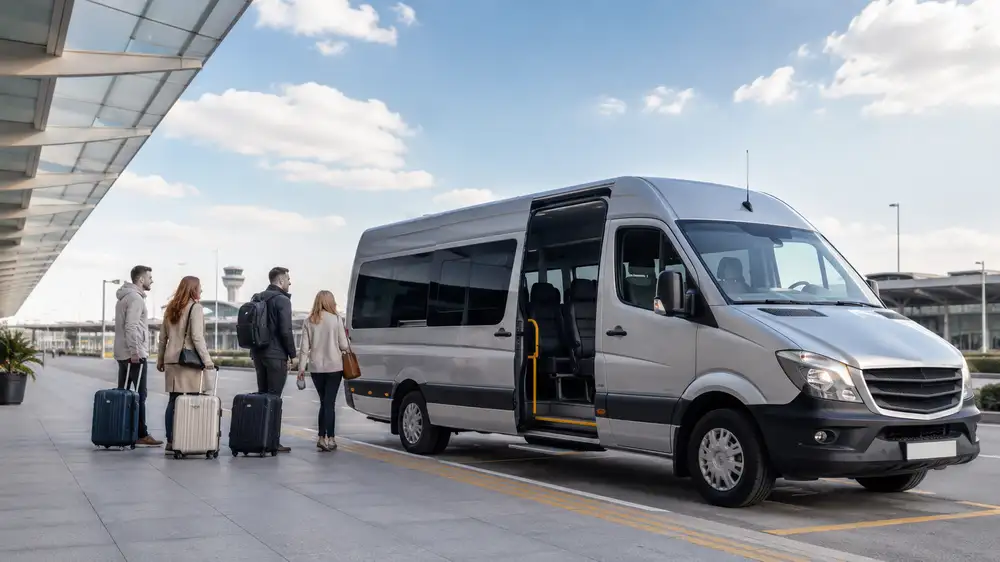
How Many Seats Are on a Minibus? Find the Right Minibus Size for Your Journey
When your group is not large enough to fill a full-size coach, a minibus is usually the most practical answer. It keeps everyone together, works across a wide range of journey types, and can access routes and venues where a larger vehicle cannot go.
In the UK, minibuses typically have between 8 and 16 passenger seats. Choosing the right size means looking beyond the headcount. This guide explains what each minibus size is suited for, what to consider before booking, and how to make the right decision for your group from the start.
How Many Seats Does a Minibus Have?
A UK minibus typically has between 8 and 16 passenger seats. The most commonly available configurations are 8, 12, 14, and 16 seaters. Each serves a slightly different purpose depending on group size, luggage volume, and the nature of the journey.
Luggage storage and seat layout vary between vehicles even within the same seating category. Always confirm both capacity and storage with your operator before you finalise a booking.
Why Minibus Size Matters Beyond Seat Numbers
Choosing a minibus based only on headcount is the most common planning mistake. A 16 seater with 16 passengers each carrying a large checked suitcase will run into storage problems immediately. Equally, a 12 seater for 10 passengers with light luggage can offer a comfortable and cost-effective journey without the need to step up in size.
Before confirming any minibus booking, think through:
• How many confirmed passengers are travelling?
• What luggage is each person bringing: full suitcases, cabin bags, day bags, or equipment?
• How long is the journey, short, regional, or long distance?
• Do passengers need extra legroom or comfort for a longer trip?
• Are there multiple pick-up or drop-off points along the route?
• Does the vehicle need to access narrow roads, private venues, or restricted areas?
• Are there children, elderly passengers, or anyone with specific mobility needs?
A reliable operator will ask for this information when you enquire. Providing it upfront means you get the right recommendation straight away rather than finding out on the day that the vehicle does not quite fit.
8 Seater Minibus
An 8 seater minibus is the entry-level option for small group travel. It carries more passengers than a large car, keeps everyone together, and handles a wide range of journey types without the cost or scale of a larger vehicle.
It works particularly well for small family outings, airport transfers for compact groups, business travel for small teams, wedding transport for close family members, and door-to-door private hire. It can navigate pick-up points, hotel forecourts, and residential streets that a larger vehicle would struggle with.
An 8 seater is commonly used for: small group airport transfers, family days out and private hire, business travel for compact teams, wedding transport for close family, station and hotel pickups, and short to medium distance group journeys.
Luggage is the most important consideration at this size. Always mention how many bags and suitcases your group will bring when requesting a quote. If space is tight, the operator will let you know or suggest an alternative.
12 Seater Minibus
A 12 seater minibus is one of the most practical mid-range options available. It offers noticeably more capacity than an 8 seater while remaining manageable for the majority of UK routes, car parks, and venue access points. For many families, small clubs, and business teams, it sits in exactly the right place between size and convenience.
This size is regularly used for family group travel, community outings, small school trips, local event transport, small corporate teams, and airport transfers with moderate luggage. It can also serve as a sensible step down from a 14 or 16 seater when the group does not fill a larger vehicle.
For journeys of more than an hour, it is worth asking about seat comfort, air conditioning, and legroom. These details make a noticeable difference on longer routes.
14 Seater Minibus
A 14 seater minibus is the right choice when a group comfortably outgrows a 12 seater but does not yet need a full 16-seat vehicle. It adds two more seats while keeping the vehicle compact enough for most UK roads, car parks, and venue drop-off points.
This size is frequently used for wedding guest transport, small school and college outings, sports club travel, corporate group hire, private parties, and airport transfers for larger small groups. It keeps everyone in one vehicle, which simplifies logistics considerably and avoids the timing complications of running two separate smaller vehicles.
One practical point: if your confirmed passenger count is close to 14, consider booking a 16 seater. Travelling with every seat occupied and no spare room for bags, coats, or equipment makes even a short journey uncomfortable. The modest step up in vehicle size is often worth it.
16 Seater Minibus
A 16 seater is the largest standard minibus available in the UK and handles the widest variety of booking types. It is used for airport transfers, school trips, sports team travel, wedding guest transport across multiple pick-up points, corporate group events, private parties, festival transfers, and large private group hire.
This size is often the first vehicle people consider when a group is too large for a car or two but not quite big enough to need a coach. It removes the coordination problems of multiple smaller vehicles and ensures everyone arrives at the same destination at the same time.
Luggage remains the key consideration. A full 16 seater where every passenger carries a large suitcase will face real storage limitations. Be specific about luggage volumes when you enquire, and the operator will either confirm the vehicle is appropriate or recommend an alternative with a larger hold.
Minibus Hire for Airport Transfers
Airport transfers are the single most common use for minibus hire in the UK. The appeal is straightforward: the whole group travels together, arrives at the correct terminal on time, and avoids the cost and confusion of coordinating multiple taxis or rideshares.
The most important thing people overlook is luggage. A passenger count of 10 looks manageable until you count the suitcases. At that point, the vehicle that seemed right may no longer be appropriate.
When booking an airport transfer, always provide: the airport name and terminal number, flight time and direction (departure or arrival), complete pick-up address or list of stops, confirmed passenger count, number of large checked suitcases, number of cabin bags, and any additional items such as pushchairs, golf bags, or sports equipment.
Sharing this information upfront gives the operator everything needed to confirm the right vehicle first time and avoids problems on departure day.
Minibus Hire for Weddings and Events
Wedding transport requires careful planning. Guests need to move between hotels, ceremony venues, and reception locations in a coordinated and timely sequence. A minibus removes the parking pressure at venues, eliminates the logistics of car sharing, and keeps the day running to schedule.
For smaller wedding groups, an 8 seater covers close family and key guests. A 12 or 14 seater works well for medium guest numbers. A 16 seater suits larger parties or situations where transport is being arranged from several different starting points.
When booking wedding minibus hire, share: all venue addresses and access restrictions, the ordered list of pick-up points, passenger counts for each leg of the journey, return timing and evening drop-off requirements, and whether any guests need additional assistance boarding or alighting. The more detail provided, the more accurately the route can be planned and the more smoothly the day will run.
Minibus Hire for Corporate Travel
For businesses, a minibus is a practical and professional solution for small group travel. It replaces the administrative burden of individual expense claims, scattered arrival times, and unreliable transport arrangements with a single managed journey where everyone travels together.
Corporate minibus hire is used for conference and meeting attendance, airport transfers for business groups, training days at external venues, client and guest transport, staff shuttles between office locations, and company away days. Vehicle presentation and driver professionalism are worth asking about specifically for client-facing or executive travel, as these details affect the impression your guests form before any meeting begins.
Minibus Hire for Schools, Clubs and Sports Teams
Schools, clubs, and sports teams make up a significant proportion of regular minibus hire in the UK. A minibus is large enough to move a group, small enough to be practical, and far easier to organise than asking parents to drive or coordinating multiple cars.
For sports teams, equipment takes up considerably more space than people expect. Football kits, cricket bags, training cones, water containers, and individual kitbags all need to fit alongside the passengers. Always factor equipment into your size decision, particularly when choosing between a 14 and 16 seater.
For school and youth travel, reliability, well-maintained vehicles, and experienced drivers should take priority over finding the lowest price. These factors matter more when you are responsible for the safety and punctuality of young passengers.
Should You Book a Minibus or a Coach?
The practical line between a minibus and a coach sits at around 16 seats. If your group fits within that range and luggage is manageable, a minibus is likely the right choice. If numbers exceed 16, or if luggage, comfort, or onboard facility requirements point toward a larger vehicle, a coach is worth considering.
Choose a minibus when your group has 8 to 16 passengers, you need door-to-door flexibility, the route includes access points a coach cannot reach, or the journey is short to medium distance with moderate luggage.
Consider stepping up to a coach when your group exceeds 16 passengers, luggage volumes require a larger hold, the journey is long distance and passenger comfort is a priority, or onboard facilities such as toilets or charging points are needed.
Our All-Ways Travel Minibus Hire Services
At All-Ways Travel, we help customers choose the right minibus for their specific journey. Some people need a compact 8 seater for a straightforward airport transfer. Others need a 16 seater for a wedding, a school trip, a sports team, or a corporate event. The right vehicle depends on the full picture, not just the seat count.
Our team looks at your passenger numbers, luggage requirements, route, timings, and comfort needs before recommending a vehicle. We make sure the vehicle fits the journey, not the other way around.
All-Ways Travel provides minibus hire for:
• Airport transfers to and from all major UK airports
• Wedding transport between hotels, ceremony venues, and reception locations
• Corporate travel for conferences, away days, training sessions, and client events
• School and college trips for educational visits and activity days
• Sports team and club travel including equipment
• Private day trips and group tours across the UK
• Festival, event, and occasion transport
• Family journeys and local private hire
Share your travel details with the All-Ways Travel team and we will recommend the most suitable minibus size for your group and your journey.
Final Thoughts
In the UK, a minibus has between 8 and 16 passenger seats. An 8 seater suits small groups and short transfers. A 12 seater works well for families and medium-small groups. A 14 seater is a strong choice for weddings, clubs, and private hire. A 16 seater is the most versatile all-round option for larger small groups and varied journey types.
Seat count is the starting point, not the full answer. Luggage, route access, journey length, passenger comfort, and the specific demands of your trip all determine which vehicle genuinely works for your group. Get those details to your operator upfront and the booking process becomes simple and accurate from the start.
Frequently Asked Questions
How many seats does a UK minibus have?
A UK minibus typically has between 8 and 16 passenger seats. The most common configurations are 8, 12, 14, and 16 seaters, each suited to slightly different group sizes and journey types.
Is a 16 seater classed as a minibus in the UK?
Yes. A 16 seater is generally classed as a minibus and is one of the most frequently booked sizes for airport transfers, school trips, sports teams, and private group hire across the UK.
What size minibus do I need for an airport transfer?
It depends on both passenger numbers and luggage. A small group with light bags may be fine in an 8 seater. Larger groups or those carrying multiple large suitcases typically need a 12, 14, or 16 seater to ensure there is adequate storage space.
Can a minibus carry luggage?
Yes, but storage capacity varies between vehicles. Always tell the operator how many suitcases, cabin bags, pushchairs, and additional items your group will bring. This allows them to confirm the vehicle is appropriate or suggest a better fit.
What is the best minibus size for a wedding?
For a small close group, an 8 seater is often sufficient. A 12 or 14 seater works well for medium-sized guest groups. A 16 seater is better suited to larger wedding parties or journeys that involve collecting guests from multiple locations.
Is minibus hire more cost-effective than booking several taxis?
For groups of six or more, minibus hire is generally more practical and cost-effective than booking multiple taxis. It keeps everyone together, simplifies timing, and removes the coordination overhead of managing several separate vehicles.
Can I book a minibus for a long-distance journey?
Yes. Minibuses can be used for both local and long-distance journeys across the UK. For longer routes, ask about seat comfort, legroom, air conditioning, and luggage capacity before confirming the booking.
How do I choose the right minibus size?
Share your confirmed passenger count, luggage details, journey distance, pick-up and drop-off points, destination, and any specific requirements with the All-Ways Travel team. We will use that information to recommend the minibus size that fits your group and your journey properly.